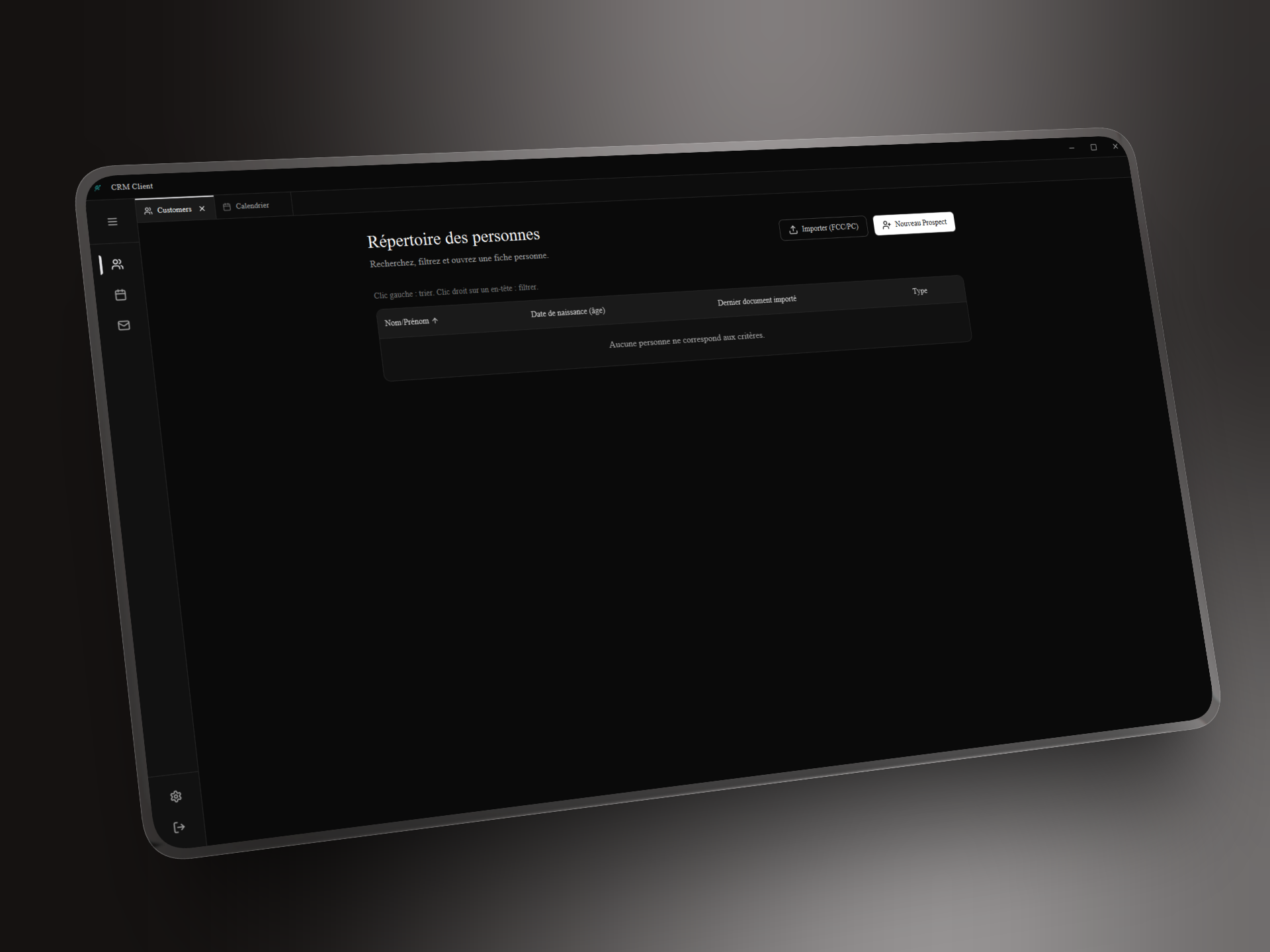
Where it started
The data was already hosted on protected remote servers. Yet centralising it still left a potential attack surface: secure infrastructure reduces the risk of a breach, but cannot eliminate it altogether.
Kinect grew out of that observation. The goal was to build a CRM for wealth management advisers that protects client records at the source without making everyday work slower or more complicated. Client information and documents therefore stay on the user’s computer, inside an encrypted local database.
Local by design
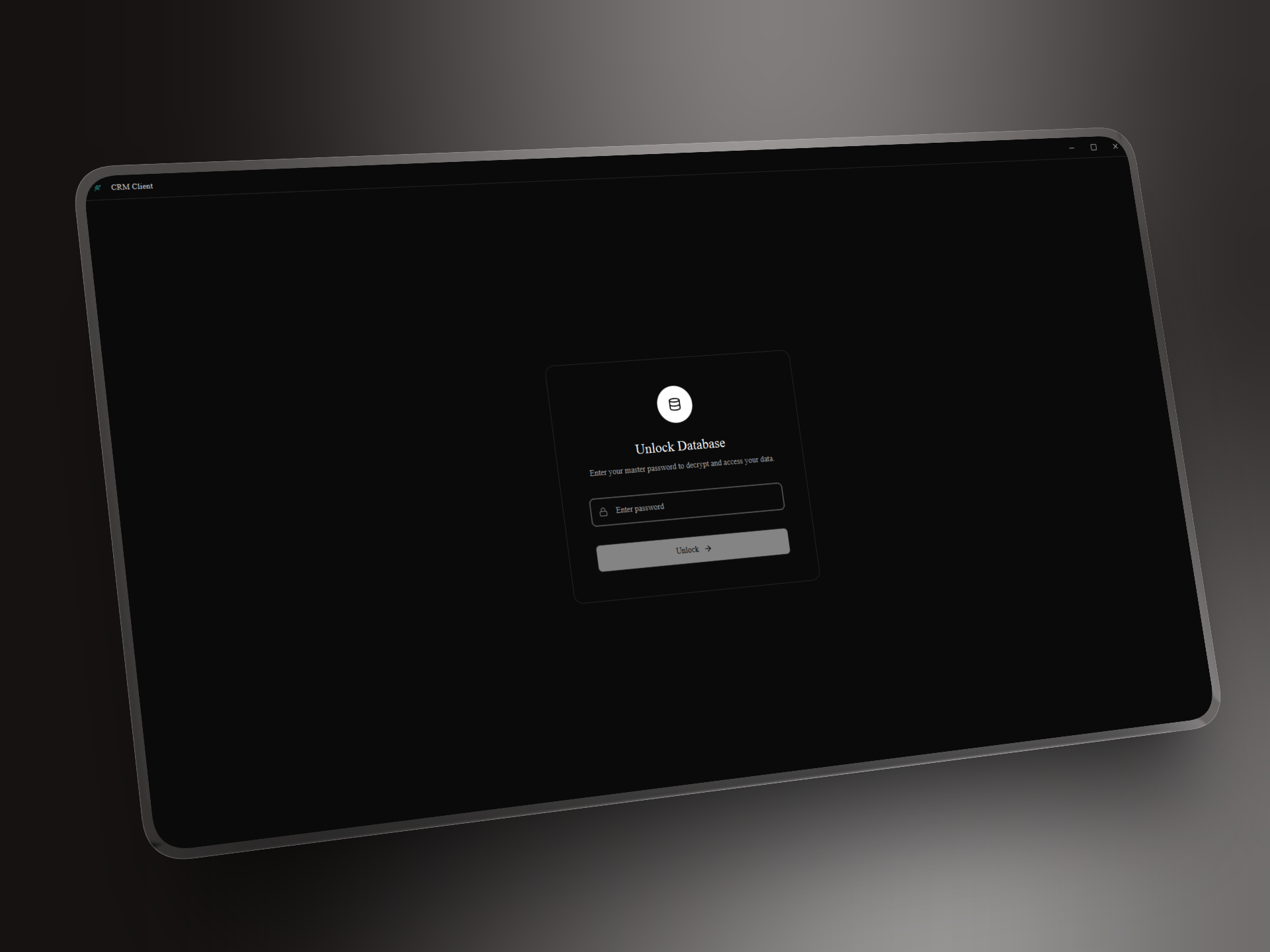
Kinect has no central server that receives client records. The database and the documents it contains remain local, and opening them requires the application to be unlocked.
The only external communications are update checks and, when enabled by the user, synchronisation with Google Calendar. The core CRM data — people, financial and wealth information, and documents — is never sent to a Kinect data server.
From PDF documents to structured client records
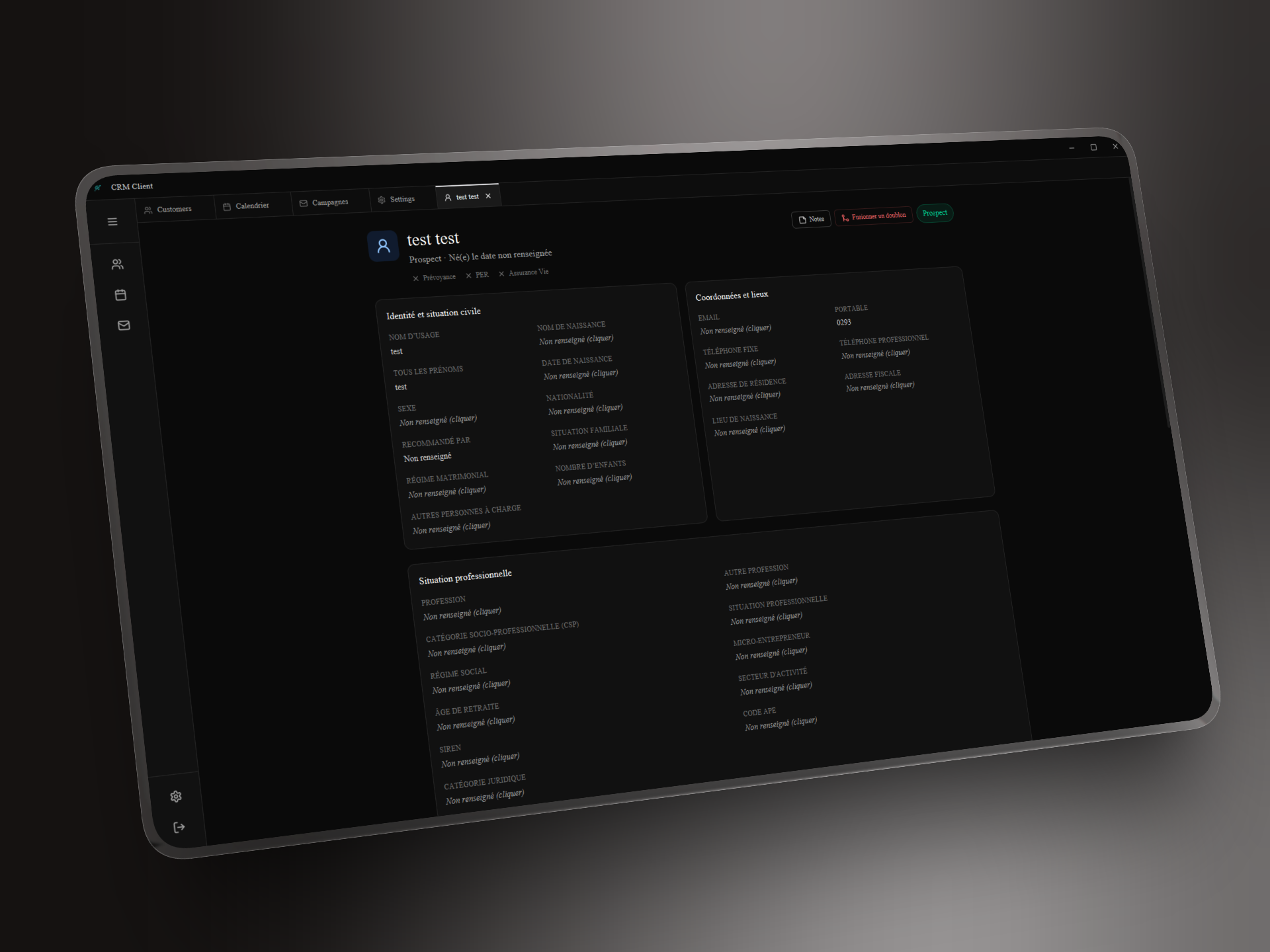
Much of a wealth management adviser’s work begins with specialist PDF documents. Kinect analyses them, extracts the relevant information, identifies the person concerned and adds it to their structured record. The original document remains linked to the record, keeping the extracted data and its source available in the same place.
The directory then becomes the gateway to a more complete view: identity, contact details, personal and professional circumstances, financial and wealth information, document history and appointments. The application also brings together notes, appointment outcomes, campaigns and optional Google Calendar synchronisation.
Protected documents that remain practical to use
Encryption does not stop at the CRM fields: the documents themselves are stored inside the encrypted database. PDFs remain available for viewing, while supported office document families — including Word, Excel, PowerPoint and equivalent formats — can be opened in their usual Windows applications.
When a document is edited, Kinect creates a controlled working copy, monitors it for saves, then writes the new version back to the database. It also handles conflicts and interrupted editing sessions, ensuring that editable documents do not become a blind spot in the protection of client data.
An architecture designed for real-world volumes
The database is organised and encrypted page by page, in 4 KB blocks. This allows the engine to work on the pages required for a given operation without loading or decrypting an entire database that may span tens of gigabytes. Targeted data access contributes to performance, but does not by itself guarantee the same speed on every computer.
The largest Kinect database currently in active use holds 100 GB. In that real-world environment, searching the directory and loading a client record containing up to 50 documents both remain under one second for the operations observed.
From a portable application to managed distribution
Kinect was initially distributed as a portable application, with every new version installed manually. It now detects available releases automatically. Users can start the download and installation directly from the application, without having a silent update imposed on them.
The interface is built with React and TypeScript and embedded in a JavaFX environment. The Java core handles storage, encryption, documents, backups, synchronisation and Windows-specific operations.
Current status
I designed and developed Kinect independently. The application is now in active use by several wealth management advisers and remains under continuous development: real-world feedback drives both fixes and new features.